I have spent numerous hours trying out online gambling options, and the disparity between live casino games and standard digital table games is still widely misunderstood. A live stream with real dealers is not just a fancier version of a random number generator product. It operates on different technology, demands specific strategic adaptations, and follows its own rhythms. When I explore platforms like Ivibet Casino, I see a handpicked collection that combines convenience with authenticity. The real issue is how the inner workings, tempo, and clarity of live dealer studios actually stack up. This analysis walks through that comparison across nine critical factors, offering you a guide for choosing where to put your money.
The Essential Difference in Game Resolution Mechanics
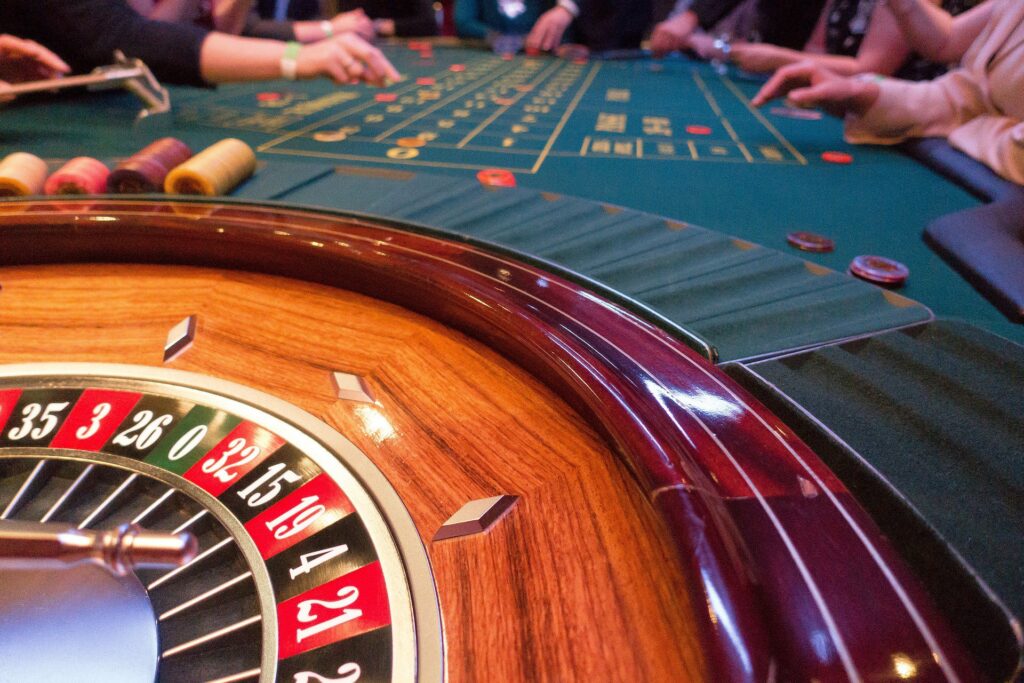
Traditional digital table games lean on a certified random number generator that locks in the outcome the moment you click. The visual card or wheel animation is just decoration, overlaid top of a result that was already determined. Live casino games are based on physical causality. A human dealer draws a card, launches a https://www.francetvinfo.fr/economie/le-groupe-casino-reclame-a-900-salaries-des-avances-sur-salaire-vieilles-de-trente-ans_6452029.html roulette ball, or shakes a dice cup in real time, while optical character recognition sensors read the physical results and convert them into data within milliseconds. This moves randomness from a software seed to a tangible event influenced by classical mechanics and tiny human variations.
The fairness perception shifts considerably. With a random number generator, I have to trust audit certificates. With a live table, I observe the dealer’s hands, monitor the ball’s trajectory, and confirm that the card pulled matches the display. This optical transparency does not make the game mathematically fairer, but it removes a layer of cryptographic abstraction that turns off some players. The trade-off is built-in latency. The ball has to settle, the card has to flip, and the sensor has to confirm before payouts process. That delay shapes the live tempo.
Staking Limits, Table Levels, and Bankroll Accessibility
Live casino tables show minimum and maximum bets, forming clear tiers. Basic roulette may allow 0.10 units, while VIP tables ask for 50 or more. This strictness stems from operational costs: a dealer table is pricey to run, so the studio must ensure betting volume warrants the expense. Low-stakes tables fill quickly and lean on volume, while high-limit tables cater to fewer players betting larger amounts. The structure influences bankroll management.
- Choose a table where the minimum bet is no more than 1–2% of your session bankroll to withstand downswings.
- Steer clear of tables where ten consecutive losses would wipe out your entire budget; that event takes place regularly in even-money games.
- Sort the lobby by limits before joining, so you do not commit to a stream only to discover unsuitable stakes.
Platforms like Ivibet Casino show table limits clearly upfront, letting me to filter for appropriate stakes without entering a game. This transparency avoids wasted time and aids me uphold disciplined bankroll allocation from the start of every session.
Comparing Pacing, Time Pressure, and Choice Windows
Automated table games let me control the speed. Turbo mode and skipped animations can churn through a hundred digital blackjack hands in minutes. Live casino games impose a collective rhythm shaped by the dealer’s professional cadence and betting windows intended for hundreds of simultaneous players. A live roulette round lasts 45 to 60 seconds from spin to spin, while a blackjack hand averages roughly 40 seconds when the table is busy. There is no fast-forward, and that enforced pacing can feel maddeningly slow if you seek rapid stimulation.
Yet that mandatory pause provides an undervalued protective function. The 15- to 20-second betting window offers me time to check my balance, reconsider a hunch bet, or just breathe before committing more funds. In a turbocharged digital environment, it is common to slip into a trance of repeating clicks where losses pile up before I have processed the previous round. The dealer’s “no more bets” announcement, the spin, the settlement ritual, and the clear gap before the next cycle generate natural circuit breakers that echo the deliberate tempo of a land-based floor.
Openness, Dispute Resolution, and Documentation
Live casino games produce a richer evidence trail than online games. Each hand, spin, or coup is documented from several viewpoints and stored for 30 to 90 days. If I dispute a result, I can provide the game ID and timestamp to request a video review. The operator can inspect the optical character recognition data and confirm whether the payout corresponded to the physical outcome. This is more definitive than deciphering an RNG log, which needs specialized technical knowledge.
Mechanical failures do occur, a lodged card, a skipping roulette ball, or a momentarily obscured camera angle. Reputable studios have recorded protocols, often featuring a pit boss coming on the feed to declare a void spin or hand following standard rules. I evaluate how openly the platform deals with these edge cases. Clear communication during the incident and a retrievable history of voided rounds suggest fairness. Operators that leave players guessing about the resolution undermine trust more than one voided spin ever could.
Picture Quality, Viewing Positions, and Studio Production Quality
Contemporary live studios employ various broadcast-grade cameras per table, including slow-motion units that record the ball falling into a roulette pocket or a card leaving the shoe. When I connect to streams through a platform like Ivibet Casino, I can switch between a wide cinematic angle showing the studio environment and a close-up view that fills the screen with table felt. Adjusted lighting eradicates shadows on cards while producing ambient warmth that evokes an upscale venue.
This production layer serves as a verification system. Multiple camera angles let me replay a close-up if I suspect a card’s fairness, and dealers function under high-definition cameras with no blind spots. That instills procedural discipline an RNG audit log fails to visually replicate. The trade-off is bandwidth consumption. Consistent high-definition streaming with selectable views requires at least 5 to 10 megabits per second. On a marginal mobile data connection, buffering and stuttering can undermine the immersive quality entirely.
Device Compatibility and the Mobile Casino Experience
Delivering a HD live video stream with synchronized betting interfaces to a smartphone is a technical challenge. Current platforms address this with adaptive bitrate streaming that changes quality based on network speed. The interface reorganizes into a portrait layout: the video feed takes up the upper portion, and betting controls are placed across the bottom for easy thumb access. Chip denominations, bet zones, and history panels are resized to stay usable on a six-inch screen.
Specific game types work better than others. Live roulette works exceptionally well because the betting grid can be zoomed with pinch gestures, and viewing the wheel requires no precise input. Live blackjack games presents more friction; decision buttons must be sufficiently large to press accurately without hiding cards. Game-show formats with straightforward binary or multiple-choice betting are the best for mobile. I suggest testing a live dealer table on both desktop and mobile with small stakes before wagering big money, because layout differences can impact decision speed.
Game Selection and Rule Differences Throughout the Live Lobby
The live lobby has grown well beyond blackjack, roulette, and baccarat. I now come across game shows combining television quiz formats with multiplier mechanics, rotating money wheels, plinko-style ball drops, and lottery-style draws with cascading bonus rounds. Traditional tables have fragmented into numerous rule variants. Live blackjack may offer Perfect Pairs or 21+3 side bets, while Infinite Blackjack includes unlimited seats and a common starting hand. Roulette covers European single-zero, American double-zero, and Lightning Roulette with randomly boosted numbers.
This variety shifts the house edge with every rule variation https://casino-ivibet.eu/. Standard European roulette holds a 2.7% edge; American double-zero increases that to 5.26%. Multiplier features often support boosted payouts by cutting base returns or introducing fees. I examine each game’s information panel before playing. The paytable, side-bet odds, and theoretical return percentage are usually visible there. A lobby that collects titles from multiple providers, as I see on Ivibet Casino, enables me evaluate rule sets side by side without changing platforms, preventing me from accepting for an inferior paytable out of convenience.
Social Layers: Dealer Engagement and Social Features
A human dealer welcomes players by username, recognizes wins verbally, and maintains steady conversation during betting intervals through an audio feed and messaging panel. The engagement quality differs with the croupier’s character and studio training. Some are truly captivating hosts who create a community spirit; others offer a mechanical script that offers little beyond declaring the game state.
The chat window enables lateral communication between players, although usually text-only. This secondary channel produces a shared experience during dramatic outcomes, a collective groan or celebration that mirrors the group atmosphere of a land-based casino. Moderation quality is the critical element. Well-managed studios utilize chat supervisors who filter offensive content and preserve politeness. Badly managed tables can degenerate into unwanted content. When I evaluate a live game, I record how rapidly unsuitable posts disappear and whether the croupier responds to sensible inquiries.
In what manner the Complete Platform Integration Shapes the Experience
A live casino is part of a broader platform that encompasses slots, sports betting, payment processing, and account tools. Integration quality dictates how smoothly I transition between game types and manage funds. I prefer a single cashier, bonuses that are valid across verticals, and the ability to transfer funds between sport and casino wallets without friction. Fragmented systems that demand separate logins or multiple wallets create unnecessary complexity.
- E-wallet withdrawals generally process within 0–24 hours after verification.
- Credit and debit card withdrawals need 1–5 business days due to banking networks.
- Bank transfers can require 3–7 business days and may involve intermediary fees.
- Cryptocurrency withdrawals, where available, complete within minutes but introduce exchange-rate risk.
Account verification catches many live players off guard. Before a first withdrawal, the platform will require identity documents, proof of address, and sometimes proof of payment method ownership. I advise completing this step immediately after registration. The approval delay can range from 24 to 72 hours, and realizing the requirement only when you are eager to cash out creates unnecessary frustration that could have been avoided.
The live casino sector has developed, but the choice between live and digital formats depends on your temperament and practical circumstances. I recommend testing both on the same platform with small stakes. Ivibet Casino, for example, allows you switch instantly between a live blackjack table and its digital counterpart. Watch how the pacing influences your decision-making. If the slower ritual frustrates you, stay with the speed of automated play; if animated RNG feels impersonal, the live interaction may define your experience. Check table limits before joining, finish account verification early, and always pick the game variant with the most favorable rules. When you compare with this analytical lens, the better format becomes clear not because one is superior, but because one matches you best.